In discourse-based grammatical theory, information flow is any tracking of referential information by speakers. Information may be new, i.e., just introduced into the conversation; given, i.e., already active in the speakers' consciousness; or old, i.e., no longer active. The various types of activation, and how these are defined, are model-dependent. Information flow affects grammatical structures such as: Word order (topic, focus, and afterthought constructions). Active, passive, or middle voice. Choice of deixis, such as articles; "medial" deictics such as Spanish ese and Japanese sore are generally determined by the familiarity of a referent rather than by physical distance. Overtness of information, such as whether an argument of a verb is indicated by a lexical noun phrase, a pronoun, or not mentioned at all. Clefting: Splitting a single clause into two clauses, each with its own verb, e.g. ‘The chicken turtles tasted like chicken.’ becomes ‘It was the chicken turtle | that tasted like chicken.’ In this case, clefting is used to shift the focus of the sentence to the subject, the chicken turtle. Front focus: Placing at the start (front) of a sentence information that would normally occur later in the sentence, to give it extra prominence. For example, in pop culture, Yoda's speech often utilizes such syntactic construction, such as when he says 'much to learn you still have' to Luke Skywalker. End focus (or end weight): Given or familiar information followed by new information. This gives prominence to the final part of the sentences and can enable suspense to build, e.g. ‘Through the door came a gigantic wolf’.(Umer Prince)
AppyStore
AppyStore is a comprehensive learning videos and games app for kids up to the age of 8 years. The platform developed by Mauj Mobile, a mobile value-added services (VAS) provider curates content to help in child development by leveraging technology. Mauj is funded by Sequoia Capital, Westbridge Capital and Intel Capital. == Background == AppyStore was launched in 2014 as a platform providing content for kids between the ages of 1.5 and 6 years. AppyStore subsequently extended its services for kids up to 8 years of age. The company operates on a subscription-based model and claims to have 5,000 learning games and videos segregated in 18 learning areas developed to help children gain optimal skills and qualities. According to an article published in Business Standard, the application is claimed to be one of the top 5 apps that help to enhance the logical and imaginative capabilities of children. AppyStore was awarded the Best app for kids by Google Play in December 2017. == Service == The company provides content via a website and an Android app. The website and android app provide learning games, rhymes, phonics, reading, stories, science, numbers, maths, logic videos comprising puzzles, worksheets, videos and fun activities and the premium subscription also includes physical worksheets which are home delivered. This content is educational and has been handpicked by teachers and experts with an understanding of the major areas of child development milestones for children up to 8 years of age. The mobile application also allows parents to track the progress of their child on the basis of the number of videos viewed.
Artificial intelligence
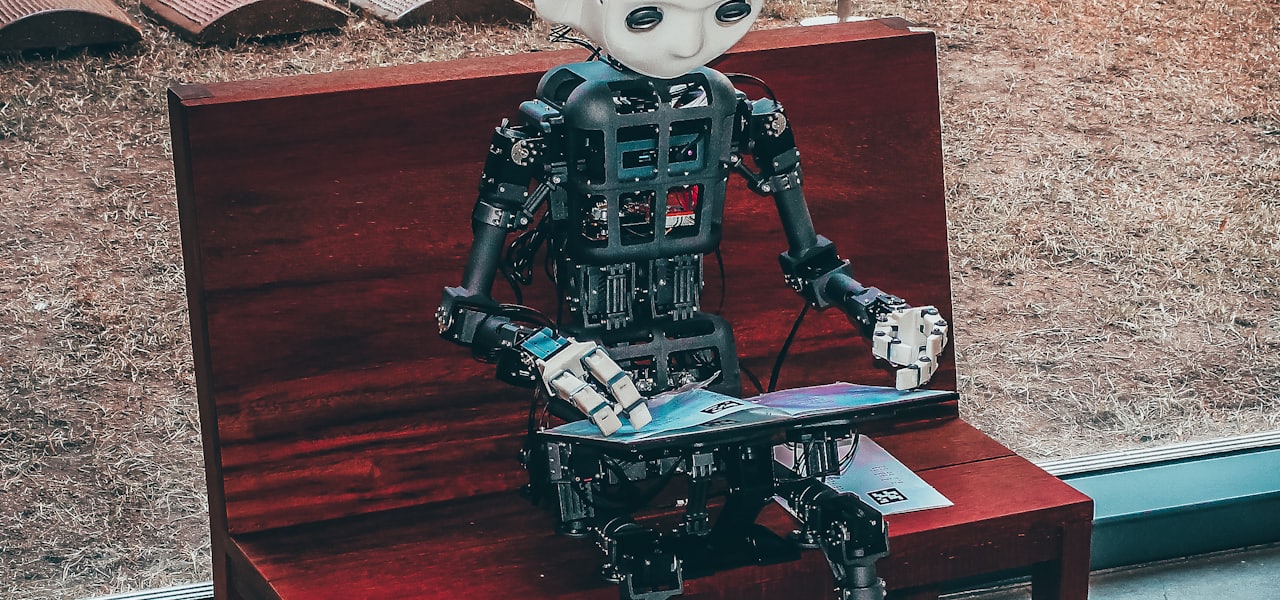
Artificial intelligence (AI) is the capability of computational systems to perform tasks typically associated with human intelligence, such as learning, reasoning, problem-solving, perception, and decision-making. It is a field of research in engineering, mathematics and computer science that develops and studies methods and software that enable machines to perceive their environment and use learning and intelligence to take actions that maximize their chances of achieving defined goals. High-profile applications of AI include advanced web search engines, chatbots, virtual assistants, autonomous vehicles, and play and analysis in strategy games (e.g., chess and Go). Since the 2020s, generative AI has become widely available to generate images, audio, and videos from text prompts. The traditional goals of AI research include learning, reasoning, knowledge representation, planning, natural language processing, and perception, as well as support for robotics. To reach these goals, AI researchers have used techniques including state space search and mathematical optimization, formal logic, artificial neural networks, and methods based on statistics, operations research, and economics. AI also draws upon psychology, linguistics, philosophy, neuroscience, and other fields. Some companies, such as OpenAI, Google DeepMind and Meta, aim to create artificial general intelligence (AGI) – AI that can complete virtually any cognitive task at least as well as a human. Artificial intelligence was founded as an academic discipline in 1956, and the field went through multiple cycles of optimism throughout its history, followed by periods of disappointment and loss of funding, known as AI winters. Funding and interest increased substantially after 2012, when graphics processing units began being used to accelerate neural networks, and deep learning outperformed previous AI techniques. This growth accelerated further after 2017 with the transformer architecture. In the 2020s, an AI boom has coincided with advances in generative AI, which allowed for the creation and modification of media. In addition to AI safety and unintended consequences and harms from the use of AI, ethical concerns, AI's long-term effects, and potential existential risks have prompted discussions of AI regulation. == Goals == The general problem of simulating (or creating) intelligence has been broken into subproblems. These consist of particular traits or capabilities that researchers expect an intelligent system to display. The traits described below have received the most attention and cover the scope of AI research. === Reasoning and problem-solving === Early researchers developed algorithms that imitated step-by-step reasoning that humans use when they solve puzzles or make logical deductions. By the late 1980s and 1990s, methods were developed for dealing with uncertain or incomplete information, employing concepts from probability and economics. Many of these algorithms are insufficient for solving large reasoning problems because they experience a "combinatorial explosion": They become exponentially slower as the problems grow. Even humans rarely use the step-by-step deduction that early AI research could model. They solve most of their problems using fast, intuitive judgments. Accurate and efficient reasoning is an unsolved problem. === Knowledge representation === Knowledge representation and knowledge engineering allow AI programs to answer questions intelligently and make deductions about real-world facts. Formal knowledge representations are used in content-based indexing and retrieval, scene interpretation, clinical decision support, knowledge discovery (mining "interesting" and actionable inferences from large databases), and other areas. A knowledge base is a body of knowledge represented in a form that can be used by a program. An ontology is the set of objects, relations, concepts, and properties used by a particular domain of knowledge. Knowledge bases need to represent things such as objects, properties, categories, and relations between objects; situations, events, states, and time; causes and effects; knowledge about knowledge (what we know about what other people know); default reasoning (things that humans assume are true until they are told differently and will remain true even when other facts are changing); and many other aspects and domains of knowledge. Among the most difficult problems in knowledge representation are the breadth of commonsense knowledge (the set of atomic facts that the average person knows is enormous); and the sub-symbolic form of most commonsense knowledge (much of what people know is not represented as "facts" or "statements" that they could express verbally). There is also the difficulty of knowledge acquisition, the problem of obtaining knowledge for AI applications. === Planning and decision-making === An "agent" is any entity (artificial or not) that perceives and takes actions in the world. A rational agent has goals or preferences and takes actions to make them happen. In automated planning, the agent has a specific goal. In automated decision-making, the agent has preferences—there are some situations it would prefer to be in, and some situations it is trying to avoid. The decision-making agent assigns a number to each situation (called the "utility") that measures how much the agent prefers it. For each possible action, it can calculate the "expected utility": the utility of all possible outcomes of the action, weighted by the probability that the outcome will occur. It can then choose the action with the maximum expected utility. In classical planning, the agent knows exactly what the effect of any action will be. In most real-world problems, however, the agent may not be certain about the situation they are in (it is "unknown" or "unobservable") and it may not know for certain what will happen after each possible action (it is not "deterministic"). It must choose an action by making a probabilistic guess and then reassess the situation to see if the action worked. Alongside thorough testing and improvement based on previous decisions, having an explanation for why the agent took certain decisions is a way to build trust, especially when the decisions have to be relied upon. In some problems, the agent's preferences may be uncertain, especially if there are other agents or humans involved. These can be learned (e.g., with inverse reinforcement learning), or the agent can seek information to improve its preferences. Information value theory can be used to weigh the value of exploratory or experimental actions. The space of possible future actions and situations is typically intractably large, so the agents must take actions and evaluate situations while being uncertain of what the outcome will be. A Markov decision process has a transition model that describes the probability that a particular action will change the state in a particular way and a reward function that supplies the utility of each state and the cost of each action. A policy associates a decision with each possible state. The policy could be calculated (e.g., by iteration), be heuristic, or it can be learned. Game theory describes the rational behavior of multiple interacting agents and is used in AI programs that make decisions that involve other agents. === Learning === Machine learning is the study of programs that can improve their performance on a given task automatically. It has been a part of AI from the beginning. There are several kinds of machine learning. Unsupervised learning analyzes a stream of data and finds patterns and makes predictions without any other guidance. Supervised learning requires labeling the training data with the expected answers, and comes in two main varieties: classification (where the program must learn to predict what category the input belongs in) and regression (where the program must deduce a numeric function based on numeric input). In reinforcement learning, the agent is rewarded for good responses and punished for bad ones. The agent learns to choose responses that are classified as "good". Transfer learning is when the knowledge gained from one problem is applied to a new problem. Deep learning is a type of machine learning that runs inputs through biologically inspired artificial neural networks for all of these types of learning. Computational learning theory can assess learners by computational complexity, by sample complexity (how much data is required), or by other notions of optimization. === Natural language processing === Natural language processing (NLP) allows programs to read, write and communicate in human languages. Specific problems include speech recognition, speech synthesis, machine translation, information extraction, information retrieval and question answering. Early work, based on Noam Chomsky's generative grammar and semantic networks, had difficulty with word-sense disambiguation unless
Inferential theory of learning
Inferential Theory of Learning (ITL) is an area of machine learning which describes inferential processes performed by learning agents. ITL has been continuously developed by Ryszard S. Michalski, starting in the 1980s. The first known publication of ITL was in 1983. In the ITL learning process is viewed as a search (inference) through hypotheses space guided by a specific goal. The results of learning need to be stored. Stored information will later be used by the learner for future inferences. Inferences are split into multiple categories including conclusive, deduction, and induction. In order for an inference to be considered complete it was required that all categories must be taken into account. This is how the ITL varies from other machine learning theories like Computational Learning Theory and Statistical Learning Theory; which both use singular forms of inference. == Usage == The most relevant published usage of ITL was in scientific journal published in 2012 and used ITL as a way to describe how agent-based learning works. According to the journal "The Inferential Theory of Learning (ITL) provides an elegant way of describing learning processes by agents".
80 Million Tiny Images
80 Million Tiny Images is a dataset intended for training machine-learning systems constructed by Antonio Torralba, Rob Fergus, and William T. Freeman in a collaboration between MIT and New York University. It was published in 2008. The dataset has size 760 GB. It contains 79,302,017 32×32-pixel color images, scaled down from images scraped from the World Wide Web over 8 months. The images are classified into 75,062 classes. Each class is a non-abstract noun in WordNet. Images may appear in more than one class. The dataset was motivated by non-parametric models of neural activations in the visual cortex upon seeing images. The CIFAR-10 dataset uses a subset of the images in this dataset, but with independently generated labels, as the original labels were not reliable. The CIFAR-10 set has 6000 examples of each of 10 classes, and the CIFAR-100 set has 600 examples of each of 100 non-overlapping classes. == Construction == It was first reported in a technical report in April 2007, during the middle of the construction process, when there were only 73 million images. The full dataset was published in 2008. They began with all 75,846 non-abstract nouns in WordNet, and then for each of these nouns, they scraped 7 image search engines: Altavista, Ask.com, Flickr, Cydral, Google, Picsearch, and Webshots. After 8 months of scraping, they obtained 97,245,098 images. Since they did not have enough storage, they downsized the images to 32×32 as they were scraped. After gathering, they removed images with zero variance and intra-word duplicate images, resulting in the final dataset. Out of the 75,846 nouns, only 75,062 classes had any results, so the other nouns did not appear in the final dataset. The number of images per noun follows a Zipf-like distribution, with 1056 images per noun on average. To prevent a few nouns taking up too many images, they put an upper bound of at most 3000 images per noun. == Retirement == The 80 Million Tiny Images dataset was retired from use by its creators in 2020, after a paper by researchers Abeba Birhane and Vinay Prabhu found that some of the labeling of several publicly available image datasets, including 80 Million Tiny Images, contained racist and misogynistic slurs which were causing models trained on them to exhibit racial and sexual bias. The dataset also contained offensive images. Following the release of the paper, the dataset's creators removed the dataset from distribution, and requested that other researchers not use it for further research and to delete their copies of the dataset.
Apertus (LLM)
Apertus is a public large language model, developed by the Swiss AI Initiative (a collaboration between EPFL, ETH Zurich, and the Swiss National Supercomputing Centre). It was released on September 2, 2025, under the free and open-source Apache 2.0 license. Designed initially for business and research use cases around the world, Apertus was trained on over 1800 languages, and comes in 8 billion or 70 billion parameter versions and is available on Hugging Face for download. The model was developed aiming to adhere to European copyright law, and is one of the first examples of AI as a public good in the vein of AI Sovereignty. It is also the first large model to comply with the European Union's Artificial Intelligence Act. At its launch, the model creators emphasized multilinguality, transparency, and auditability as priorities in contrast to commercial frontier model. While international reception was largely positive, the first iteration was significantly behind the capabilities of frontier models and needs adaptation for many use cases with chatbots being a secondary but not a primary use case. As of late 2025, it was considered the largest and most capable fully open model. The capability of future models will depend in part on how much more funding can be secured.
Kernel embedding of distributions
In machine learning, the kernel embedding of distributions (also called the kernel mean or mean map) comprises a class of nonparametric methods in which a probability distribution is represented as an element of a reproducing kernel Hilbert space (RKHS). A generalization of the individual data-point feature mapping done in classical kernel methods, the embedding of distributions into infinite-dimensional feature spaces can preserve all of the statistical features of arbitrary distributions, while allowing one to compare and manipulate distributions using Hilbert space operations such as inner products, distances, projections, linear transformations, and spectral analysis. This learning framework is very general and can be applied to distributions over any space Ω {\displaystyle \Omega } on which a sensible kernel function (measuring similarity between elements of Ω {\displaystyle \Omega } ) may be defined. For example, various kernels have been proposed for learning from data which are: vectors in R d {\displaystyle \mathbb {R} ^{d}} , discrete classes/categories, strings, graphs/networks, images, time series, manifolds, dynamical systems, and other structured objects. The theory behind kernel embeddings of distributions has been primarily developed by Alex Smola, Le Song, Arthur Gretton, and Bernhard Schölkopf. A review of recent works on kernel embedding of distributions can be found in. The analysis of distributions is fundamental in machine learning and statistics, and many algorithms in these fields rely on information theoretic approaches such as entropy, mutual information, or Kullback–Leibler divergence. However, to estimate these quantities, one must first either perform density estimation, or employ sophisticated space-partitioning/bias-correction strategies which are typically infeasible for high-dimensional data. Commonly, methods for modeling complex distributions rely on parametric assumptions that may be unfounded or computationally challenging (e.g. Gaussian mixture models), while nonparametric methods like kernel density estimation (Note: the smoothing kernels in this context have a different interpretation than the kernels discussed here) or characteristic function representation (via the Fourier transform of the distribution) break down in high-dimensional settings. Methods based on the kernel embedding of distributions sidestep these problems and also possess the following advantages: Data may be modeled without restrictive assumptions about the form of the distributions and relationships between variables Intermediate density estimation is not needed Practitioners may specify the properties of a distribution most relevant for their problem (incorporating prior knowledge via choice of the kernel) If a characteristic kernel is used, then the embedding can uniquely preserve all information about a distribution, while thanks to the kernel trick, computations on the potentially infinite-dimensional RKHS can be implemented in practice as simple Gram matrix operations Dimensionality-independent rates of convergence for the empirical kernel mean (estimated using samples from the distribution) to the kernel embedding of the true underlying distribution can be proven. Learning algorithms based on this framework exhibit good generalization ability and finite sample convergence, while often being simpler and more effective than information theoretic methods Thus, learning via the kernel embedding of distributions offers a principled drop-in replacement for information theoretic approaches and is a framework which not only subsumes many popular methods in machine learning and statistics as special cases, but also can lead to entirely new learning algorithms. == Definitions == Let X {\displaystyle X} denote a random variable with domain Ω {\displaystyle \Omega } and distribution P {\displaystyle P} . Given a symmetric, positive-definite kernel k : Ω × Ω → R {\displaystyle k:\Omega \times \Omega \rightarrow \mathbb {R} } the Moore–Aronszajn theorem asserts the existence of a unique RKHS H {\displaystyle {\mathcal {H}}} on Ω {\displaystyle \Omega } (a Hilbert space of functions f : Ω → R {\displaystyle f:\Omega \to \mathbb {R} } equipped with an inner product ⟨ ⋅ , ⋅ ⟩ H {\displaystyle \langle \cdot ,\cdot \rangle _{\mathcal {H}}} and a norm ‖ ⋅ ‖ H {\displaystyle \|\cdot \|_{\mathcal {H}}} ) for which k {\displaystyle k} is a reproducing kernel, i.e., in which the element k ( x , ⋅ ) {\displaystyle k(x,\cdot )} satisfies the reproducing property ⟨ f , k ( x , ⋅ ) ⟩ H = f ( x ) ∀ f ∈ H , ∀ x ∈ Ω . {\displaystyle \langle f,k(x,\cdot )\rangle _{\mathcal {H}}=f(x)\qquad \forall f\in {\mathcal {H}},\quad \forall x\in \Omega .} One may alternatively consider x ↦ k ( x , ⋅ ) {\displaystyle x\mapsto k(x,\cdot )} as an implicit feature mapping φ : Ω → H {\displaystyle \varphi :\Omega \rightarrow {\mathcal {H}}} (which is therefore also called the feature space), so that k ( x , x ′ ) = ⟨ φ ( x ) , φ ( x ′ ) ⟩ H {\displaystyle k(x,x')=\langle \varphi (x),\varphi (x')\rangle _{\mathcal {H}}} can be viewed as a measure of similarity between points x , x ′ ∈ Ω . {\displaystyle x,x'\in \Omega .} While the similarity measure is linear in the feature space, it may be highly nonlinear in the original space depending on the choice of kernel. === Kernel embedding === The kernel embedding of the distribution P {\displaystyle P} in H {\displaystyle {\mathcal {H}}} (also called the kernel mean or mean map) is given by: μ X := E [ k ( X , ⋅ ) ] = E [ φ ( X ) ] = ∫ Ω φ ( x ) d P ( x ) {\displaystyle \mu _{X}:=\mathbb {E} [k(X,\cdot )]=\mathbb {E} [\varphi (X)]=\int _{\Omega }\varphi (x)\ \mathrm {d} P(x)} If P {\displaystyle P} allows a square integrable density p {\displaystyle p} , then μ X = E k p {\displaystyle \mu _{X}={\mathcal {E}}_{k}p} , where E k {\displaystyle {\mathcal {E}}_{k}} is the Hilbert–Schmidt integral operator. A kernel is characteristic if the mean embedding μ : { family of distributions over Ω } → H {\displaystyle \mu :\{{\text{family of distributions over }}\Omega \}\to {\mathcal {H}}} is injective. Each distribution can thus be uniquely represented in the RKHS and all statistical features of distributions are preserved by the kernel embedding if a characteristic kernel is used. === Empirical kernel embedding === Given n {\displaystyle n} training examples { x 1 , … , x n } {\displaystyle \{x_{1},\ldots ,x_{n}\}} drawn independently and identically distributed (i.i.d.) from P , {\displaystyle P,} the kernel embedding of P {\displaystyle P} can be empirically estimated as μ ^ X = 1 n ∑ i = 1 n φ ( x i ) {\displaystyle {\widehat {\mu }}_{X}={\frac {1}{n}}\sum _{i=1}^{n}\varphi (x_{i})} === Joint distribution embedding === If Y {\displaystyle Y} denotes another random variable (for simplicity, assume the co-domain of Y {\displaystyle Y} is also Ω {\displaystyle \Omega } with the same kernel k {\displaystyle k} which satisfies ⟨ φ ( x ) ⊗ φ ( y ) , φ ( x ′ ) ⊗ φ ( y ′ ) ⟩ = k ( x , x ′ ) k ( y , y ′ ) {\displaystyle \langle \varphi (x)\otimes \varphi (y),\varphi (x')\otimes \varphi (y')\rangle =k(x,x')k(y,y')} ), then the joint distribution P ( x , y ) ) {\displaystyle P(x,y))} can be mapped into a tensor product feature space H ⊗ H {\displaystyle {\mathcal {H}}\otimes {\mathcal {H}}} via C X Y = E [ φ ( X ) ⊗ φ ( Y ) ] = ∫ Ω × Ω φ ( x ) ⊗ φ ( y ) d P ( x , y ) {\displaystyle {\mathcal {C}}_{XY}=\mathbb {E} [\varphi (X)\otimes \varphi (Y)]=\int _{\Omega \times \Omega }\varphi (x)\otimes \varphi (y)\ \mathrm {d} P(x,y)} By the equivalence between a tensor and a linear map, this joint embedding may be interpreted as an uncentered cross-covariance operator C X Y : H → H {\displaystyle {\mathcal {C}}_{XY}:{\mathcal {H}}\to {\mathcal {H}}} from which the cross-covariance of functions f , g ∈ H {\displaystyle f,g\in {\mathcal {H}}} can be computed as Cov ( f ( X ) , g ( Y ) ) := E [ f ( X ) g ( Y ) ] − E [ f ( X ) ] E [ g ( Y ) ] = ⟨ f , C X Y g ⟩ H = ⟨ f ⊗ g , C X Y ⟩ H ⊗ H {\displaystyle \operatorname {Cov} (f(X),g(Y)):=\mathbb {E} [f(X)g(Y)]-\mathbb {E} [f(X)]\mathbb {E} [g(Y)]=\langle f,{\mathcal {C}}_{XY}g\rangle _{\mathcal {H}}=\langle f\otimes g,{\mathcal {C}}_{XY}\rangle _{{\mathcal {H}}\otimes {\mathcal {H}}}} Given n {\displaystyle n} pairs of training examples { ( x 1 , y 1 ) , … , ( x n , y n ) } {\displaystyle \{(x_{1},y_{1}),\dots ,(x_{n},y_{n})\}} drawn i.i.d. from P {\displaystyle P} , we can also empirically estimate the joint distribution kernel embedding via C ^ X Y = 1 n ∑ i = 1 n φ ( x i ) ⊗ φ ( y i ) {\displaystyle {\widehat {\mathcal {C}}}_{XY}={\frac {1}{n}}\sum _{i=1}^{n}\varphi (x_{i})\otimes \varphi (y_{i})} === Conditional distribution embedding === Given a conditional distribution P ( y ∣ x ) , {\displaystyle P(y\mid x),} one can define the corresponding RKHS embedding as μ Y ∣ x = E [ φ ( Y ) ∣ X ] = ∫ Ω φ ( y ) d P ( y ∣ x ) {\displaystyle \mu _{Y\mid x}=\mathbb {E} [\varphi (Y)\mid X]=\int _{\Omega